How Long Is a College Semester? Semesters, Quarters, and Trimesters Explained
Quick answer
A college semester is typically about 15–16 weeks of instruction plus a finals week. In the semester system, fall commonly runs late August to mid-December and spring runs mid-January to early-to-mid May. Quarter-system schools instead run ~10-week terms (fall, winter, spring, plus an optional summer). Exact dates vary by school — the registrar’s academic calendar is the authoritative source.
Drop your syllabus here
Every assignment, exam, and reading on your calendar in about 30 seconds. Free, no account.
PDF, Word, or a photo of a paper one. No syllabus handy? See a sample
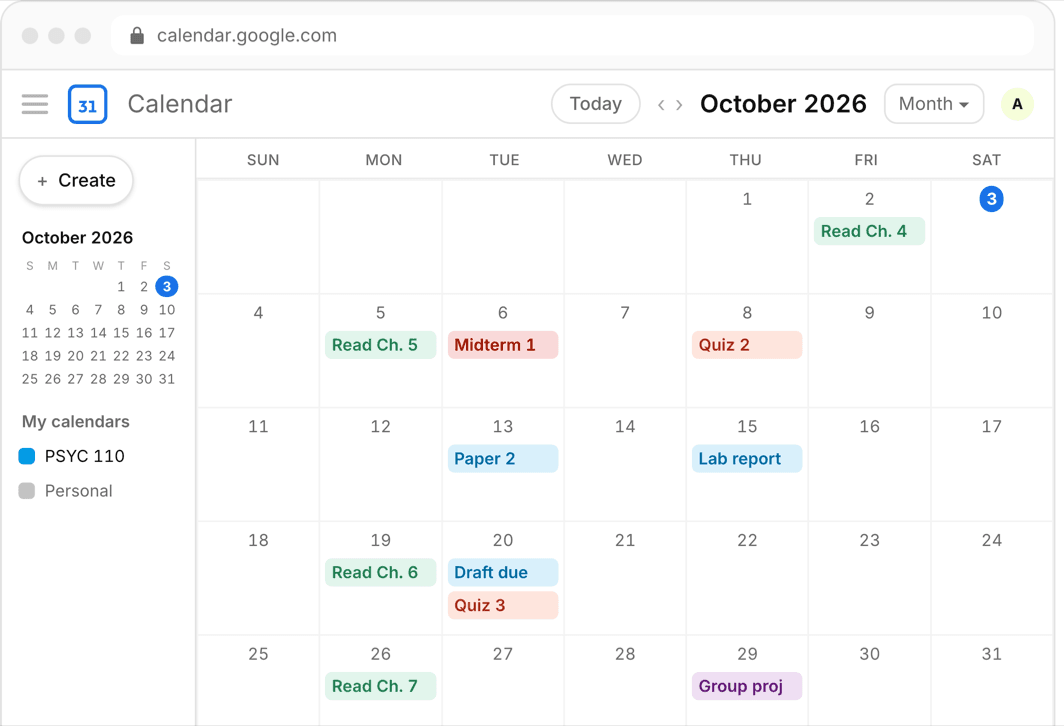
It sounds like a trivia question, but the length and structure of your academic term quietly shapes everything: how fast courses move, when the crunch weeks land, how transfer credits convert, and how much runway you actually have between “plenty of time” and finals. Students who internalize their calendar’s shape plan differently — and better — than students who experience the term as an undifferentiated stretch that suddenly ends.
This guide covers the standard answer and its variations: how long a semester really is, typical start and end dates, how quarters and trimesters differ, and what each structure means for how you plan.
Or skip all of it
Upload the syllabus. Get the calendar.
Every assignment and exam on Google, Apple, or Outlook in about 30 seconds. One syllabus free, no account, no card.
The standard answer: 15–16 weeks, twice a year
Most U.S. colleges use the semester system: two long terms per academic year, each around 15–16 weeks of instruction plus a finals week. Inside the academic calendar you will also find the term’s milestones: an add/drop deadline in the first week or two, a withdrawal deadline somewhere past the midpoint, at least one break, and a reading period or study days before finals at some schools.
The common date pattern (always verify against your registrar): fall starts in late August, breaks for Thanksgiving, and ends with finals in mid-December; spring starts in mid-January — often near MLK Day — includes a week-long spring break around week eight or nine, and ends with finals in early-to-mid May. Many schools also run compressed summer sessions (often 4–12 weeks) and some offer a short January “winter session” between the two semesters.
Quarters and trimesters: the other clocks
A significant minority of schools run on different calendars, and the differences are practical, not cosmetic:
- Quarter system: three ~10-week terms per academic year (fall, winter, spring) plus an optional summer quarter — used by many West Coast schools, among others; fall often starts in late September, and the year commonly ends in June
- Trimester system: three terms of roughly 12–15 weeks; in common usage the label overlaps with quarters-without-summer, and relatively few U.S. colleges use a true trimester calendar
- 4-1-4 and January terms: two semesters with a one-course intensive January term between them — a hybrid some liberal arts schools use
- Credit conversion: quarter credits ≠ semester credits — the standard conversion is 1 quarter credit = 2/3 of a semester credit, which matters for transfers and grad applications
- Course loads differ: quarter students typically take 3–4 courses at a time versus 4–6 on semesters, but cover material faster per course
Why the calendar shape changes how you plan
The same planning principles apply everywhere, but the calendar sets the tempo — and the tolerance for drift:
- Semester pace is a slow burn with cliffs: weeks 1–4 feel light, midterms arrive around weeks 6–10, and roughly half the total grade weight often lands in the final third — the early calm is the time to bank progress, not coast
- Quarter pace is immediate: with ~10 weeks, midterms can start in week 3–4 and there is no light opening stretch; falling one week behind on a quarter is like falling two behind on a semester
- Breaks split semesters into chapters: fall is “start → Thanksgiving → finals,” spring is “start → spring break → finals” — planning each chapter separately beats planning an abstract fifteen weeks
- The administrative dates are part of the shape: add/drop, withdrawal, and registration-for-next-term deadlines all live on the academic calendar and are expensive to miss
- Multi-calendar coordination is real: internships, transfer applications, and programs at other schools run on their own calendars — quarter students often end spring in June, after semester internships have started
Put the whole term on one calendar you actually see
Knowing that a semester is fifteen weeks is abstract; seeing your fifteen weeks — every exam, paper, break, and deadline from all your courses laid out from syllabus week to finals — is what turns calendar knowledge into planning. The shape of your specific term, with its particular crunch weeks, only becomes visible when everything is in one place.
That is the fastest version of it: upload each syllabus to Classmaite at myclassmaite.com/try — PDF, Word doc, or screenshot — and in about 30 seconds per course every assignment, exam, and reading deadline is extracted and synced to Google Calendar, Apple Calendar, or Outlook, with reminders weighted by grade impact. Add your school’s academic-calendar dates and the whole term is on one screen: not “a semester is about fifteen weeks,” but your fifteen weeks, exactly as they are about to happen. First syllabus is free, no account needed.
Frequently asked questions
How many weeks is a college semester?
Typically 15–16 weeks of instruction plus a finals week, for roughly 16–17 weeks end to end. Some schools run slightly shorter (14-week) terms. Summer sessions are compressed versions of the same courses, commonly 4–12 weeks. Your registrar’s academic calendar lists the exact first and last day of every term.
What months are fall and spring semester?
The common U.S. pattern: fall semester runs from late August (some schools early September) through finals in mid-December, and spring runs from mid-January through finals in early-to-mid May. Quarter-system schools differ — fall often starts in late September and spring quarter ends in June. Individual schools vary by a week or two in either direction.
Is the quarter system harder than semesters?
Not harder in content, but faster in tempo: quarters compress a course into ~10 weeks, so exams start earlier, deadlines come denser, and a lost week costs proportionally more. The trade is fewer simultaneous courses (usually 3–4) and more total courses per year. Students who keep deadlines visible and start work early do fine on either clock; the quarter system just punishes drift sooner.
How long is a college semester in hours of work?
Using the standard rule of one in-class hour plus 2–3 study hours per credit per week: a 15-credit semester is roughly 45–60 hours weekly, which over a 15-week term totals about 700–900 hours. That framing is useful for planning — a semester is not an abstract stretch of months but a defined budget of work hours competing with everything else in your week.