What Is a Prerequisite? How Prereq Chains Really Work
Quick answer
A prerequisite is a course (or requirement, like a placement score) you must complete before you’re allowed to enroll in a more advanced course. For example, Calculus I is a prerequisite for Calculus II. Registration systems enforce prerequisites automatically, though instructors can sometimes waive them with an override.
Drop your syllabus here
Every assignment, exam, and reading on your calendar in about 30 seconds. Free, no account.
PDF, Word, or a photo of a paper one. No syllabus handy? See a sample
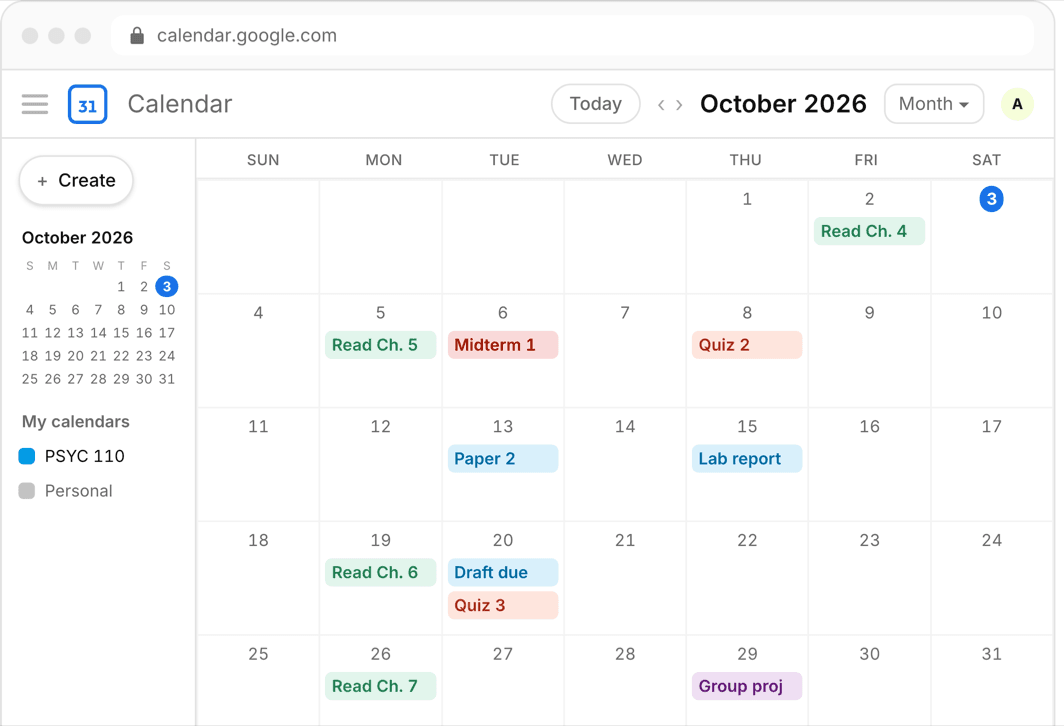
You’re planning next semester, you find the perfect class, and registration blocks you with an error: “prerequisite not met.” Welcome to one of the most consequential and least-explained mechanics in college. Prerequisites decide what you can take, when you can take it, and — if you’re not paying attention — whether you graduate on time.
Here’s what prerequisites actually are, how chains of them structure your entire degree, and what to do when you think one shouldn’t apply to you.
Or skip all of it
Upload the syllabus. Get the calendar.
Every assignment and exam on Google, Apple, or Outlook in about 30 seconds. One syllabus free, no account, no card.
The definition, precisely
A prerequisite (“prereq”) is a requirement you must satisfy before enrolling in a course. Usually it’s another course you must pass — often with a minimum grade like C or better, not just a D. But prereqs can also be a placement test score, a minimum number of completed credits, class standing (junior status, say), or admission to a specific major.
Two cousins worth knowing: a corequisite is a course you must take at the same time (a chemistry lecture and its lab), and a recommended prerequisite is a suggestion the system won’t enforce — you can register without it, but the professor is telling you what the course assumes you know.
How prereq chains work — and why they matter more than you think
Prerequisites form chains: Calc I → Calc II → Differential Equations → the engineering courses that require Differential Equations. Each link is offered in specific semesters, and here’s the trap: a chain of four courses takes a minimum of four semesters no matter how motivated you are. Miss the first link in fall, and if it’s not offered in spring, the entire chain — and your graduation date — slides back a year.
This is why advisors obsess over “sequence courses” in your first year. Map the longest prereq chain in your intended major before your first registration. That chain, not your total credit count, is usually what determines your earliest possible graduation date.
Where to find a course’s prerequisites
- The course catalog — the official source. Every course listing states its prereqs (e.g., “Prerequisite: MATH 141 with a grade of C or higher”).
- The registration system — it enforces prereqs at enrollment and tells you exactly which one you’re missing.
- Your degree audit or advising portal — shows which prereqs you’ve satisfied and which remain.
- The syllabus — often restates assumed knowledge, which tells you what the professor actually expects on day one.
Waivers and overrides: when the rule bends
Prereqs are enforced by software, but humans can override them. If you have equivalent knowledge — AP or IB credit still being processed, a transfer course the system didn’t map, work experience, or a course from another department that covers the same material — you can request a prerequisite waiver or instructor override.
The process is usually: email the instructor (or department office) explaining specifically why you’re prepared, attach evidence (transcript, syllabus from the equivalent course), and if they agree, they issue an electronic permission code or sign a form that lets you register. Ask early — overrides granted after a class fills don’t help you. And be honest with yourself: prereqs exist because professors have watched unprepared students fail. A waiver gets you in the door; it doesn’t make the course easier.
Prereqs and your semester plan
Treat prerequisites as the skeleton of your degree plan: schedule chain courses first, every semester, and fit electives around them. When a prereq course starts going badly, act fast — dropping below the minimum grade doesn’t just hurt your GPA, it blocks the next link and can cascade through your whole plan.
Once you’re enrolled, the challenge flips from getting into courses to keeping up with them — dropping each syllabus into Classmaite gives you every deadline on your calendar in about 30 seconds, which is exactly the kind of early-warning system that keeps a prereq grade above the C line.
Frequently asked questions
What happens if I fail a prerequisite course?
You typically can’t enroll in the next course until you retake and pass the prerequisite — and many programs require a C or better, so even a D can block you. If you’re already registered for the next course, the school may drop you from it automatically after grades post.
Can I take a class without the prerequisite?
Sometimes. If you have equivalent preparation (AP credit, a transfer course, professional experience), you can request an instructor override or prerequisite waiver. It’s granted case by case — email the instructor with specific evidence of your preparation, and ask before the course fills.
What is the difference between a prerequisite and a corequisite?
A prerequisite must be completed before you enroll in a course. A corequisite must be taken at the same time — like a lab that accompanies a lecture. Registration systems typically require you to enroll in both corequisites together in the same semester.
Do AP credits count as prerequisites?
Usually yes, once they’re on your transcript. A qualifying AP score is typically converted to credit for a specific course, which then satisfies any prereq that course would. The catch is processing time — if your scores haven’t posted yet, ask the department for a temporary override.