What Is a Registrar? The Office That Runs Your Academic Life
Quick answer
The registrar is the university office responsible for official academic records and the machinery around them: course registration, transcripts, grade posting, enrollment verification, degree audits, and graduation clearance. If a document about your academic life needs to be official, the registrar is the office that produces it.
Drop your syllabus here
Every assignment, exam, and reading on your calendar in about 30 seconds. Free, no account.
PDF, Word, or a photo of a paper one. No syllabus handy? See a sample
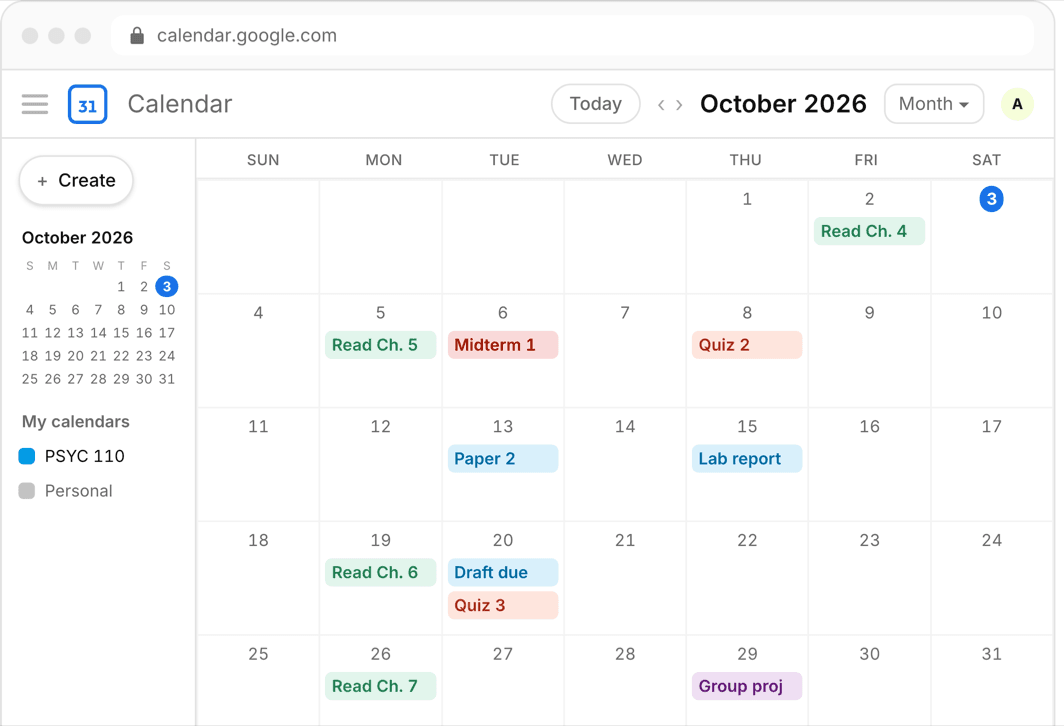
The registrar is the most important campus office you’ve never thought about. It doesn’t teach, bill, or advise — it keeps the record. Every course you register for, every grade you earn, every credential you’ll ever need verified passes through this one office, and half a dozen moments in your college career will route through it whether you know its name or not.
Here’s what the registrar actually does, the specific things you’ll need from it, and how to keep it from ever becoming your problem.
Or skip all of it
Upload the syllabus. Get the calendar.
Every assignment and exam on Google, Apple, or Outlook in about 30 seconds. One syllabus free, no account, no card.
The definition, and what the office actually owns
The registrar (formally the Office of the Registrar) is the institution’s keeper of official academic records. It runs course registration each term, maintains the master course schedule and catalog, records grades after professors submit them, produces transcripts, verifies enrollment and degrees to outside parties, enforces academic policies like add/drop deadlines, and certifies that you’ve met the requirements to graduate.
The easiest way to place it: the registrar owns records, the bursar owns billing, advisors own planning, financial aid owns aid. Students constantly email the wrong office — if your question is about what’s officially on file or officially scheduled, it’s a registrar question.
The things you’ll actually do through the registrar
- Register for classes — the registration system, your enrollment windows, and waitlists are all registrar machinery.
- Add, drop, or withdraw from courses — including the deadlines that decide whether it’s free, a “W,” or a tuition loss.
- Order official transcripts — for internships, grad school, and jobs. Usually a small fee and a processing delay, so never order the day before a deadline.
- Get enrollment verification — the official letter proving you’re a student, needed for insurance, car leases, some scholarships, and staying on a parent’s benefits.
- Declare or change your major and minor — the form that makes it official lives here.
- Run degree audits and apply for graduation — yes, graduation requires an application, with a deadline, typically a semester or more in advance.
- Update your legal or preferred name, request a FERPA privacy hold, or fix a record error — all registrar functions.
Registrar deadlines: the ones with real consequences
The registrar publishes the academic calendar, and its dates are the hard-edged ones of your semester: registration windows, add/drop, withdrawal deadlines, and the graduation application cutoff. These deadlines don’t bend for good intentions — miss add/drop by a day and a free schedule change becomes a transcript “W” or a bill.
Also in the registrar’s toolkit: the registration hold, which blocks you from registering until some obligation is cleared — an unpaid bursar balance, missing immunization records, an advising requirement. Holds have a talent for surfacing the morning your registration window opens, so check your student portal for them a week or two early, every term.
FERPA, in one paragraph
The registrar is also the enforcement point for FERPA, the federal law making your academic records private. Once you enroll in college, your grades belong to you — not your parents — regardless of who pays tuition, unless you sign a release. The registrar handles those releases, and can also place a directory hold that stops the school from confirming even basic information about you publicly.
Staying off the registrar’s radar
A well-run semester touches the registrar exactly three times: registering, maybe adjusting during add/drop, and eventually applying to graduate. Getting there is mostly calendar hygiene — put the registrar’s published deadlines for each term into your own calendar the day they’re announced, and check for holds before every registration window.
Classmaite handles the other half of that calendar: drop in each syllabus and every course deadline appears alongside those registrar dates in about 30 seconds.
Frequently asked questions
What is the difference between the registrar and the bursar?
The registrar manages academic records — registration, transcripts, grades, enrollment verification, graduation. The bursar manages money — tuition billing, payments, refunds. They interact mostly through holds: an unpaid bursar balance often becomes a registrar block on your registration or transcript.
How do I get my transcript from the registrar?
Order it through the registrar’s website or your student portal — most schools use an online ordering system with electronic or mailed delivery, a small fee, and a processing time of a few hours to a few business days. Order early; unpaid balances can hold a transcript hostage.
Can my parents see my grades in college?
Not by default. Under FERPA, college academic records belong to the student regardless of who pays tuition. Parents can see grades only if you sign a FERPA release with the registrar, or in narrow cases like tax-dependency disclosures that some schools permit.
What is a registration hold?
A block the registrar places on your account that prevents registering (and sometimes transcript orders) until an obligation is cleared — commonly an unpaid balance, missing immunization records, or a required advising meeting. Check your portal for holds a week or two before every registration window.